Your cart
There are no more items in your cart
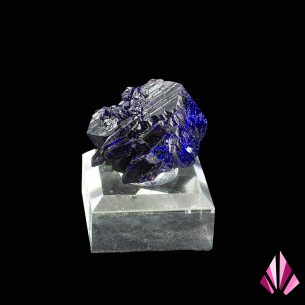
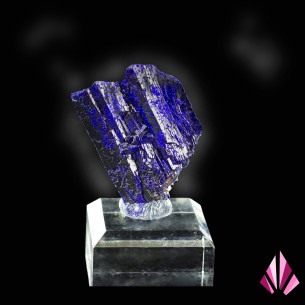
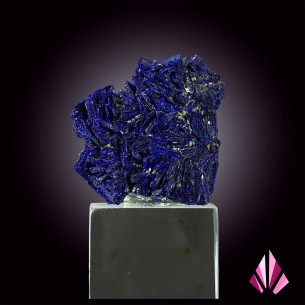
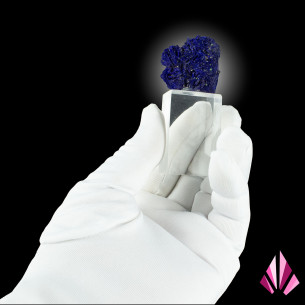
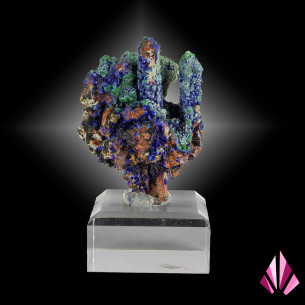
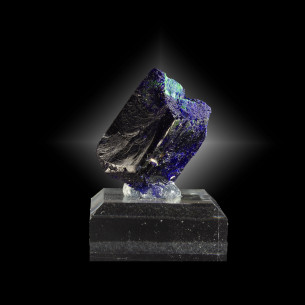
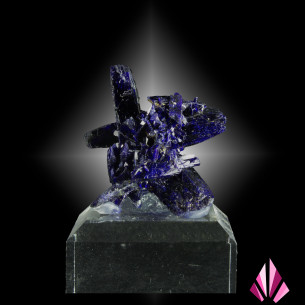
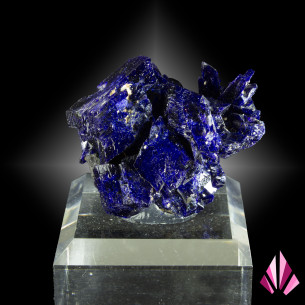
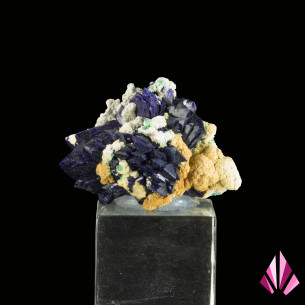
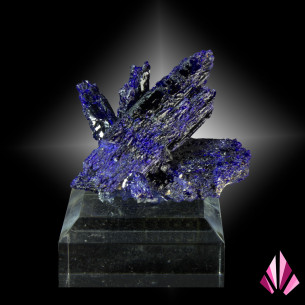
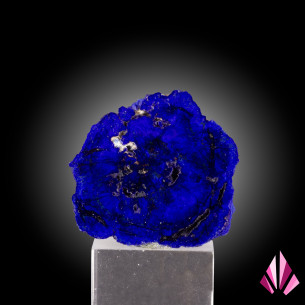
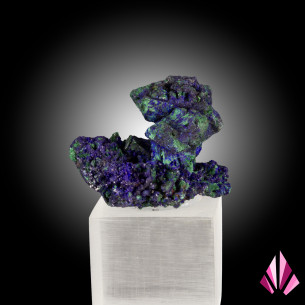
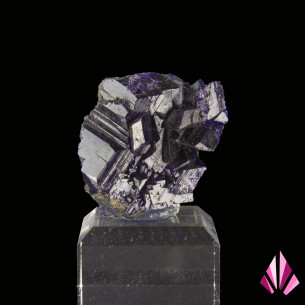
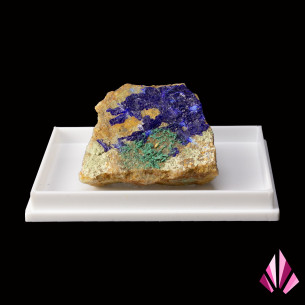
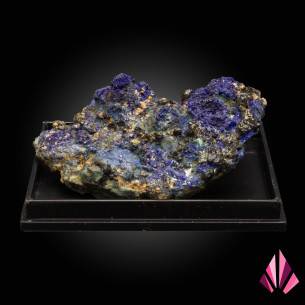
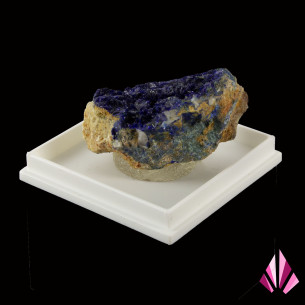
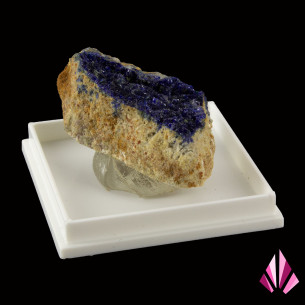
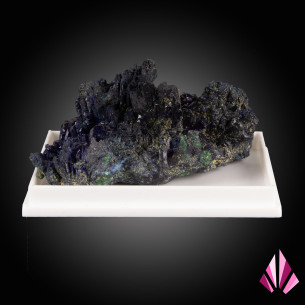
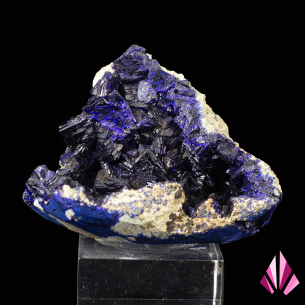
Azurites are admired for their deep-blue crystals, sometimes appearing almost black from certain angles, yet revealing brighter blue tones in the light. Our selection includes individual crystals and clusters, specimens displayed on stands, natural associations with malachite, and a geode lined with crystals.
The azurite specimens available for sale are displayed further down this page.
Morocco holds an important place in our selection, particularly with crystallized azurite from Kerrouchen and specimens from Bou-Azzer and Touissit. These localities produce very different crystal formations, both in their development and in the way they are arranged on the matrix.
Other localities are also represented, including Cap Garonne in the Var region of France, Kolwezi in the Democratic Republic of the Congo, and Russia, with a cut and polished azurite specimen.
Azurite is a basic copper carbonate with the chemical formula Cu₃(CO₃)₂(OH)₂. It forms mainly in the oxidation zones of copper deposits. It crystallizes in the monoclinic system and may develop prismatic or tabular crystals, as well as aggregates of small crystals.
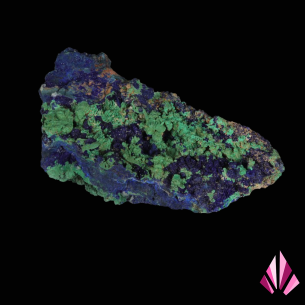
Azurite is frequently associated with malachite, another copper carbonate whose green hues create a striking contrast with azurite's blue color. Some specimens also contain other associated minerals, particularly calcite.
Each specimen has detailed photographs and its own video.