Your cart
There are no more items in your cart
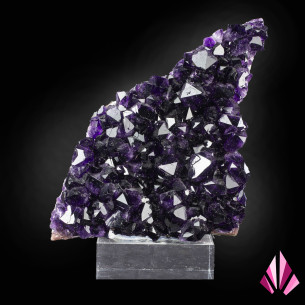
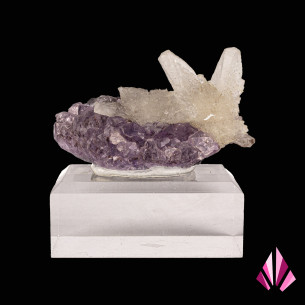
Amethyst is a violet variety of quartz, with shades ranging from pale lilac to deep purple. Whether found as individual crystal points, crystal groups or geodes, it draws attention through its colours and the lustre of its crystal faces. Some specimens stand out for their intense colour, others for the arrangement of their crystals or the contrast with associated minerals.
Explore our amethyst specimens and geodes available below, with varied colours and crystal formations, and find a distinctive piece to enhance your mineral collection.
Our selection includes amethyst specimens from Brazil, Uruguay, Morocco and Nigeria. Moroccan amethyst geodes feature cavities lined with crystals, while several Brazilian specimens are associated with calcite, creating attractive contrasts.
Transparency, natural lustre and different shades of purple give each amethyst its own appearance. From geodes to mineral associations, this variety highlights the different forms and characteristics of violet quartz.