Your cart
There are no more items in your cart
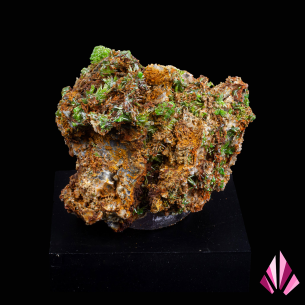
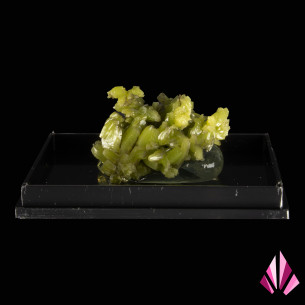
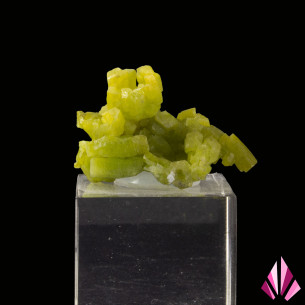
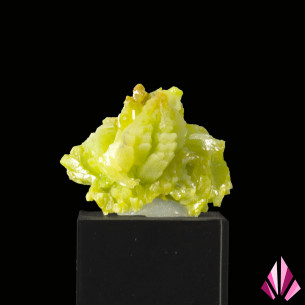
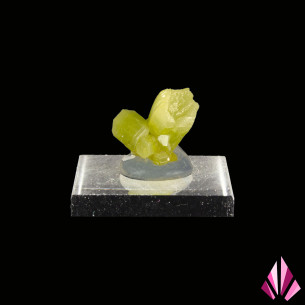
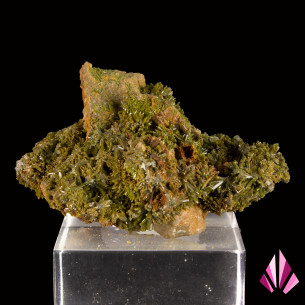
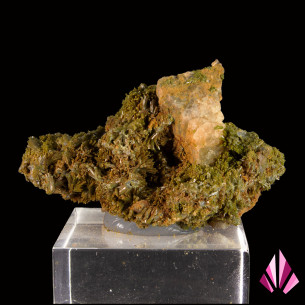
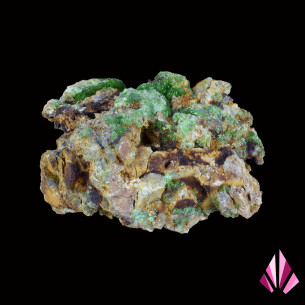
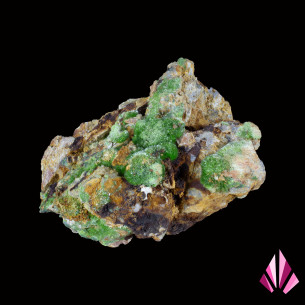
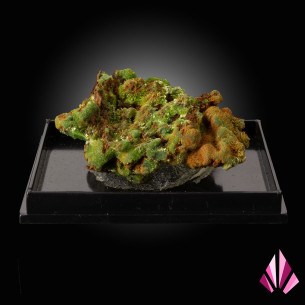
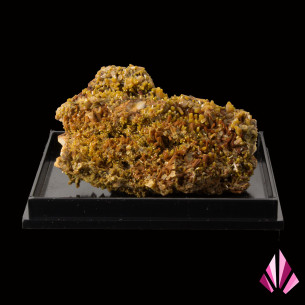
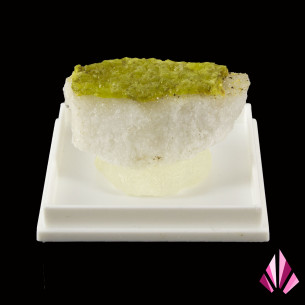
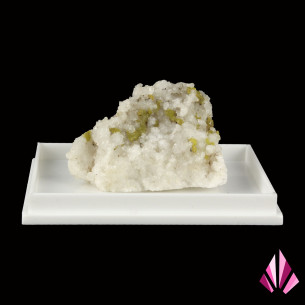
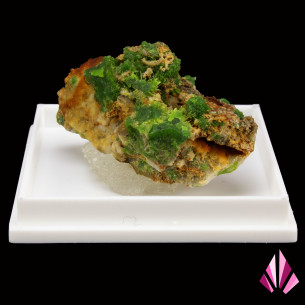
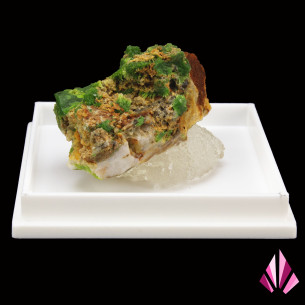
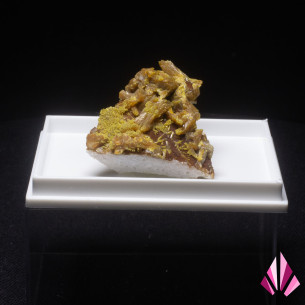
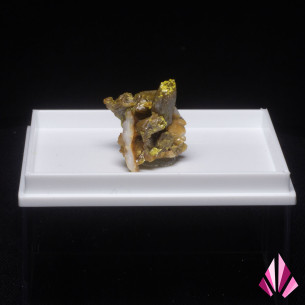
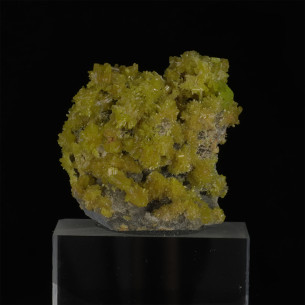
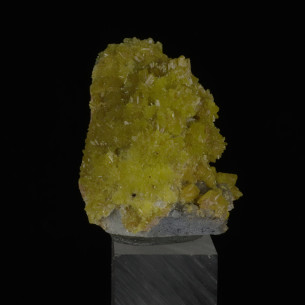
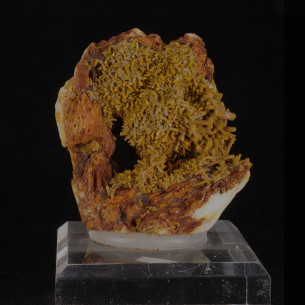
Pyromorphite is distinguished by its often prismatic crystals, with colours ranging from green to yellow and sometimes orange-brown. The specimens offered here come from several renowned French localities, including Saint-Salvy in Tarn, the Les Farges mine in Corrèze and Asprières in Aveyron, as well as Hunan in China. Several French specimens come from older mineral collections, including pieces collected in the 1980s.
The pyromorphite specimens currently available are displayed further down this page.
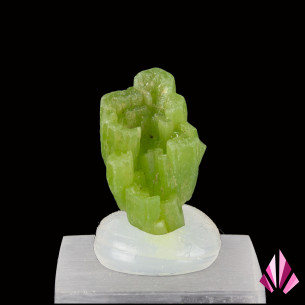
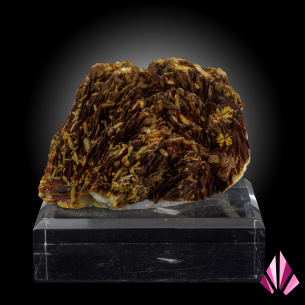
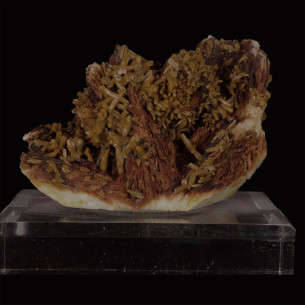
Our selection illustrates different crystal formations: individual crystals, tightly grouped crystals and aggregates partially covering their matrix. It includes pyromorphite associated with baryte from the Les Farges mine, as well as crystals on quartz from Asprières. Variations in colour, size and crystal arrangement give each specimen its own distinctive character.
Pyromorphite is a lead chlorophosphate mineral with the chemical formula Pb5(PO4)3Cl, belonging to the apatite group. It forms mainly in the oxidation zones of lead deposits and crystallizes in the hexagonal crystal system.
Its crystals may be short and stout, elongated or occasionally tabular. They frequently display a characteristic hexagonal cross-section and may form compact aggregates or groups of well-defined individual crystals. Their colour varies depending on formation conditions and the presence of certain chemical elements.
Each specimen is presented with photographs and a detailed video, allowing you to appreciate its crystal formations and distinctive features.